
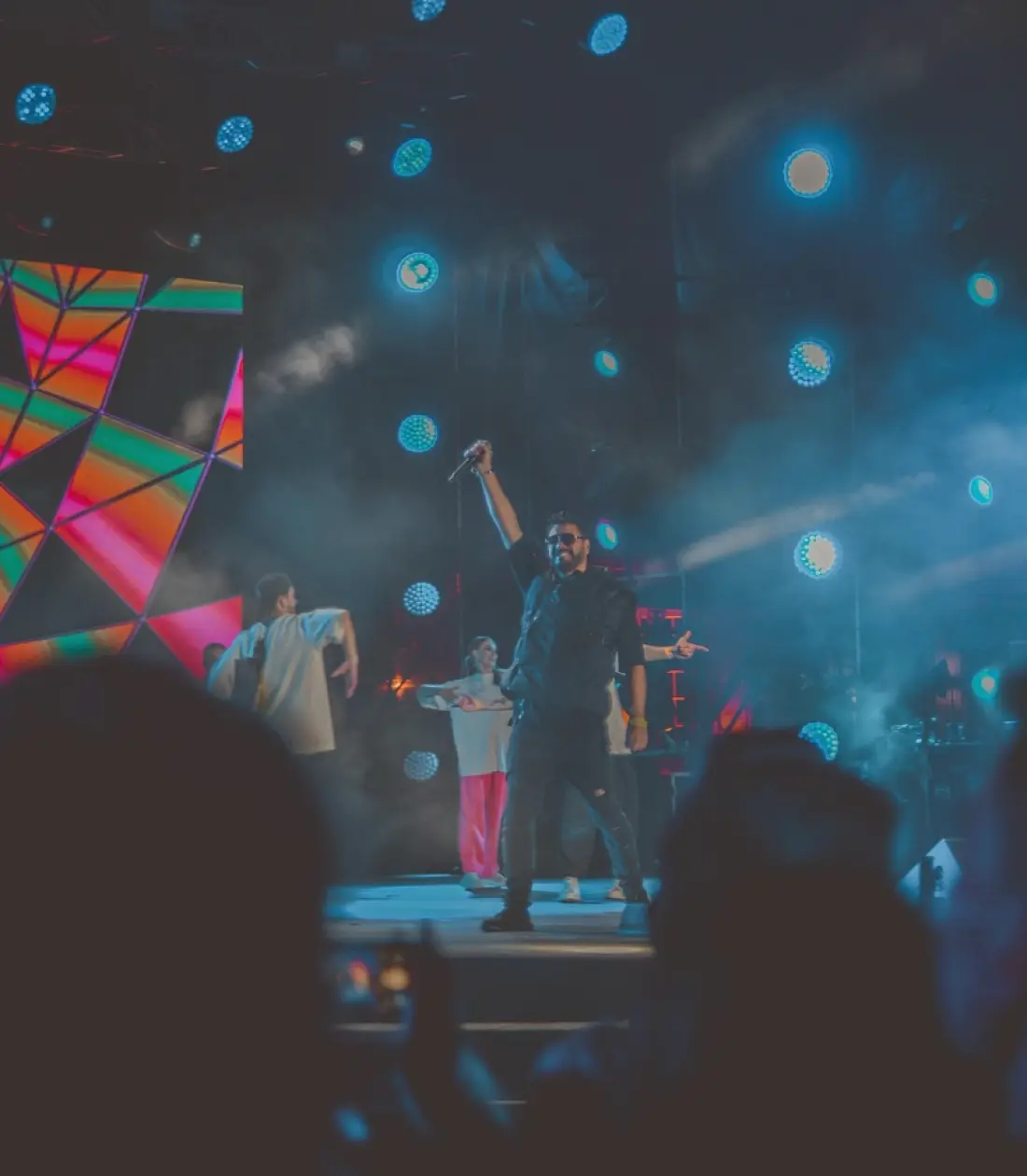
It starts with a walk round the room
Before anything is drawn, someone from our team goes to the venue. For stage and event lighting that visit matters more than any brief, because a room tells you things an email cannot. We look at ceiling height, where the rigging points are and what they are rated for, how far the power distribution sits from the stage, and whether the audience will be looking into a window or a bright wall.
I am usually there as the audio engineer, so I notice different things from Priya, our lighting lead. She looks up and across; I listen to how the room rings and where cables will have to run. Between us we come away with a rough sketch, a list of questions and photographs of every awkward corner.
We also ask who will be operating on the night and how much time they will have to learn the desk. That answer shapes the plan more than people expect.
- Ceiling height and rated rigging points
- Power supply and where distribution can sit
- Sight lines, windows and reflective surfaces
- Who operates the show and how much rehearsal time exists
Turning the sketch into a plan
Back in Chelmsford the sketch becomes a drawn plan: a top-down layout showing where each truss, bar and fixture hangs, with a section view so everyone can see the angles. Priya works out what each position is for, such as key light on the speaker, wash on the band, back light to separate people from the backdrop, and effects only where they earn their place.
Every fixture on the plan has a number, a position and a purpose. If we cannot say what a light is doing, it comes off the drawing. This keeps the rig smaller and the power draw honest, and it makes the budget conversation easier because each line can be explained.
We then check the plan against the venue's limits: total weight on each point, number of circuits, and the length of cable from desk to furthest fixture.
Rigging advice that keeps people safe
Rigging is the part of the work where we are most cautious. Our role is advice and planning: we state what weight we expect on each point, how it should be spread, and what the venue or the hired riggers need to confirm. We do not guess at the capacity of a beam we have not seen documented.
A good rigging plan is dull to read. It lists loads, hang positions, safety bonds for every fixture and the order in which things go up. Dull is the aim. When the crew arrives, nobody should be making decisions about weight on a ladder.
We also mark the plan with what must stay clear: fire exits, sprinkler heads, house lights and any hanging items belonging to the venue.
- Stated load per point, spread across the structure
- Secondary safety bond on every hung fixture
- Clear marking of exits and venue-owned equipment
The day the truss goes up
On the build day the plan comes out as a printed set and a shared file. The crew chief works through it in order: truss assembled on the floor, fixtures hung and bonded, cabling dressed, then everything flown to height. Priya or one of us is on site for the first hours to answer questions where the drawing meets reality, which it always does somewhere.
Typical surprises are a pillar that blocks a sight line, a power outlet that is dead, or a stage that is lower than the paperwork said. We solve these by moving a fixture or two and updating the drawing straight away, so the version on the wall matches what hangs overhead.
Focusing comes last and takes longer than anyone budgets for. Lamps are pointed one by one against a person standing in the key positions.
Programming, rehearsal and what we leave behind
With the rig focused, the operator and Priya build the looks: a plain walk-in state, a speaker state, a band state, and a few changes for transitions. We prefer fewer, cleaner states that the operator can trust over a long cue list that falls apart under pressure.
Rehearsal is where the plan is tested against people. Someone walks the stage in dark clothing, someone else in white, and we adjust levels until faces read well on camera if the event is being filmed or streamed. In my own work I check that no fixture is putting fan noise or buzz into the microphones.
Before we leave, the operator gets the final plan, the patch list and a note of the decisions made on the day.
- Patch list and final drawing handed to the operator
- Saved looks named plainly for the show running order
- Notes on anything changed from the original plan
Load-out and what we learn from it
Taking a rig down tells you whether it was well designed. Cables that were labelled go back in the right cases in minutes; cables that were not take an hour. We ask crews what slowed them and feed that back into the next plan, usually in small ways such as moving a distribution box or changing a cable length.
We keep a short record for every job: what was planned, what changed and why. Over the years that record has become the most useful tool we have, because venues repeat and so do their quirks.
If you have a venue visit coming up, the best thing you can send us beforehand is the room's technical sheet, if it has one, and a rough run of the event.
A lighting plan looks simple on paper, but it is the product of a venue visit, careful arithmetic about weight and power, and a willingness to change the drawing when the room disagrees. Our part is to make the decisions early, write them down plainly and stay available when the truss goes up. If you are planning a concert, festival or corporate event, a conversation before the venue is booked can save a good deal of rework.